How to get your trade business to appear on Google Maps
Appearing in Google Maps local search relies on clear business details, accurate trade categories, consistent business information, and prompt customer feedback.
By SyncMate

On this page
Trade businesses often lose work simply because potential local customers cannot find accurate details online when searching for immediate service. Search results display local map entries right near the top of the screen, connecting nearby homeowners directly with tradespeople. If a search system finds conflicting contact details or unclear suburb coverage, it may lack the confidence to show your business to local searchers. Setting up clear business profiles, maintaining accurate contact information, and managing trade details properly across the web ensures your business is discoverable when local jobs arise.
What determines which trade businesses appear on Google Maps
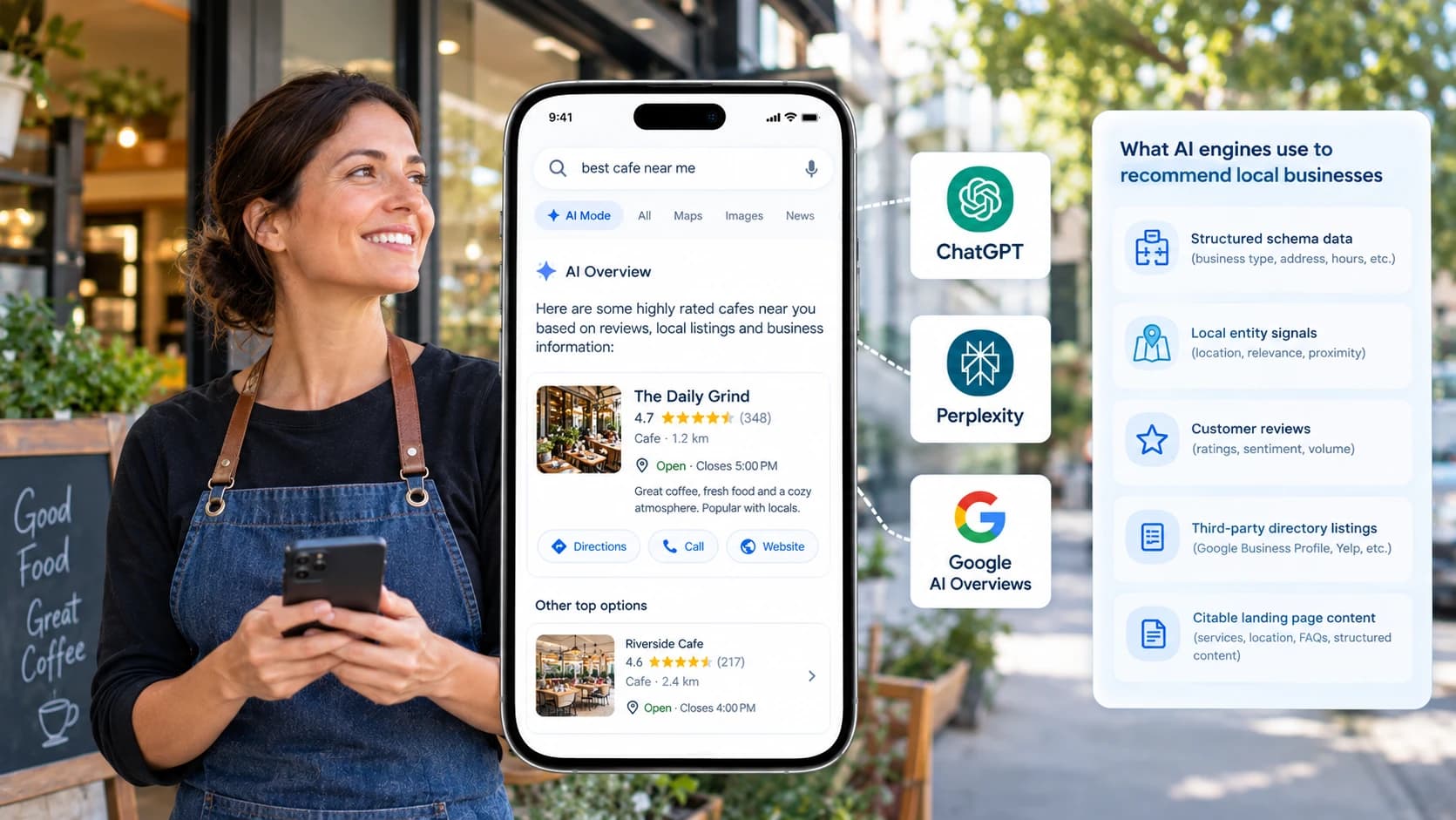
Search systems generally evaluate three main signals when deciding which local trade businesses to display: distance, relevance and detail consistency. Distance measures how close your registered address or service area is to the person searching or to the suburb specified in their query.
Relevance reflects how closely your trade category and business description match what the customer requested. Search systems analyze your core trade type to ensure they match searchers with appropriate tradespeople.
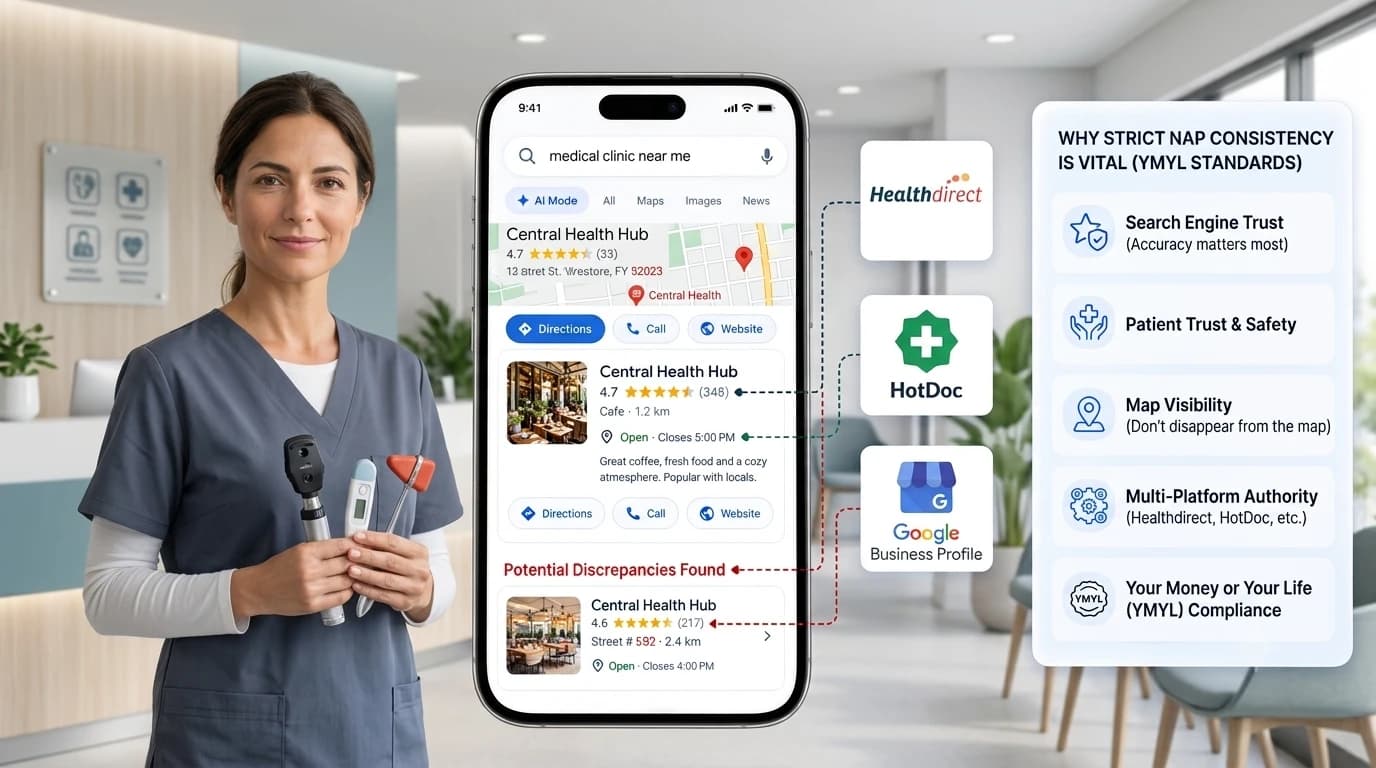
Detail consistency refers to how reliably your business name, phone number, address and licensing information match across public directories and government registers. When search systems find conflicting information on different websites, it can reduce their confidence in recommending your business. Maintaining consistent details across the web helps search engines verify that your trade enterprise is active and legitimate.
Selecting precise trade categories
Choosing the correct trade categories helps search engines understand exactly what services your business provides. Your primary category is likely to have a strong influence on how search systems categorise your core trade, whether you operate as an electrician, plumber, builder, or carpenter. Selecting a category that is too broad may dilute how well your business matches specific local searches.
Secondary categories allow you to list additional specialized services without confusing search engines about your main work. For example, a plumbing business might add gas fitting or hot water installation as secondary services. Keeping categories specific and accurate ensures search systems connect you with customers who need your exact trade skills in your area.
Setting up service areas for mobile tradies
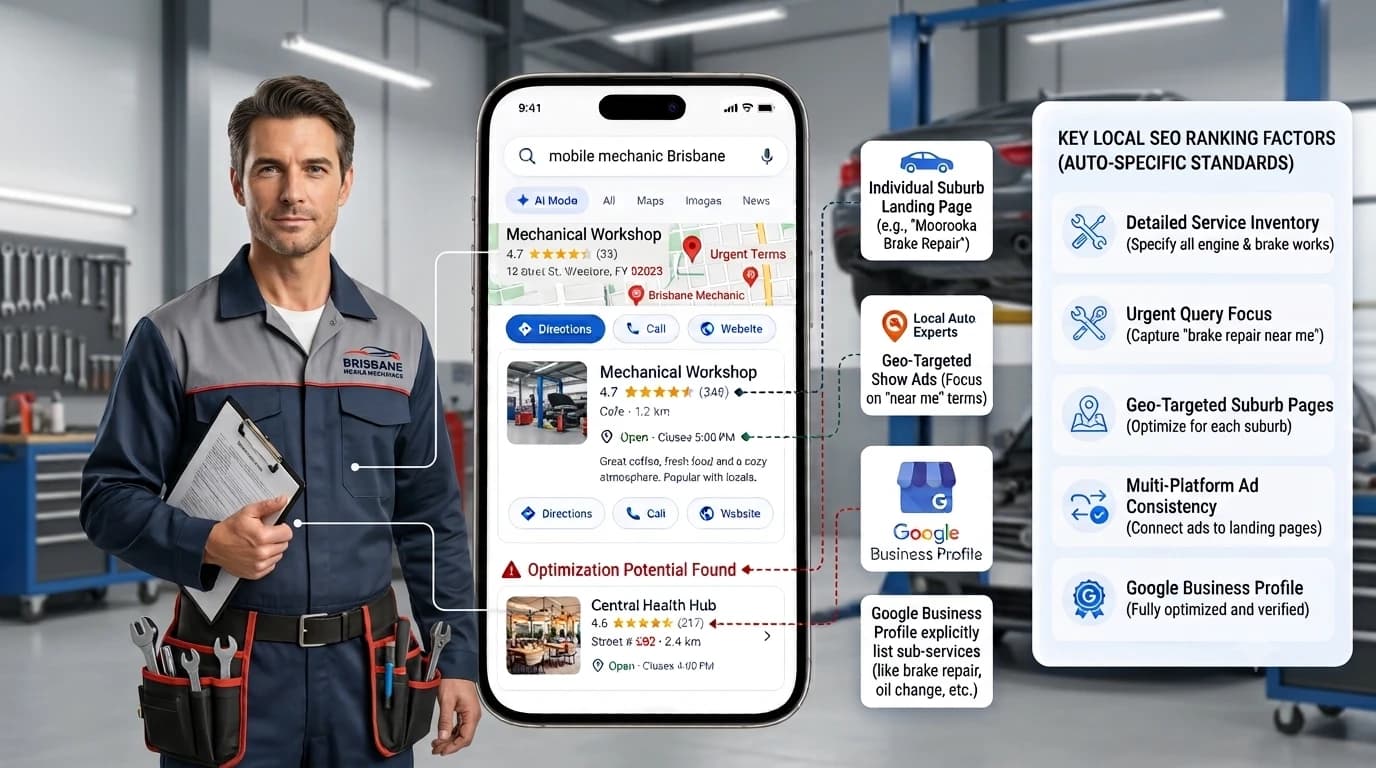
Mobile trades that visit customer sites often operate without a public shopfront or office. Search tools allow you to hide your physical residential address while defining explicit service areas by suburb or postcode.
Specifying the actual suburbs you cover prevents search engines from assuming you only serve your immediate residential address. Setting broad or unrealistic travel zones can confuse local search systems, whereas listing your true working catchment builds clearer local relevance. You can learn more about how trade sites are structured for local service areas in our guide on websites for tradies.
Displaying Australian state licensing and business details
Australian state regulators require trades to display valid licence numbers and business identifiers on public commercial communications. Including your licence details and ABN on your website and online directory entries gives search systems additional real-world reference points to verify your business.
When state register records match the business name and details listed across public web sources, search engines can confirm your operation is active and legally compliant in your state. Mismatched business names between your licence and directory entries can create uncertainty for both search algorithms and prospective customers.
Keeping business details identical across directories
Trade businesses often update trading hours, phone numbers or suburb coverage over time, but older details frequently remain on public web directories. Search systems may compare information from various public websites to evaluate business consistency. If your main phone number on your website does not match your details on trade registers, search systems may find it harder to display your business with confidence.
Ensuring your trade name, phone number, physical address or service area match everywhere protects your local standing. Australian trades must also keep state licensing details and business identifiers consistent. You can review how local search details operate across different trade sectors in our local search FAQ.
Gathering authentic reviews from local customers
Recent reviews from local homeowners signal to search systems that your business is active and completing work in specific suburbs. Customers who mention the work completed and their suburb in a review help provide natural context for search engines. Requesting feedback promptly after finishing a job makes it easier for satisfied clients to share their experience.
Responding professionally to reviews also shows that you engage with your local community and value customer feedback. Consistent, genuine reviews built over time tend to support your visibility in local search results far more than a sudden batch of ratings. Keeping customer details organised helps you reach out for feedback while the completed job is still fresh in their mind.
From SyncMate
How SyncMate helps
SyncMate provides LandMark, a local search product that keeps an Australian trade business findable and correctly described on Google, Apple, Bing and AI assistants. SyncMate is a managed service sold on a 15-minute call rather than self-serve software, serving Australian small businesses and trades. Pricing is $150 a month including GST for the first three months, then $250 a month with no lock-in contract, and your business data always stays with you.
Frequently asked questions
Conflicting details on different websites can reduce a search tool's confidence in recommending your business. Keeping your phone number, business name, and service area identical everywhere helps preserve your local standing.
Related articles
Appearing in the Google Maps local map section requires clear trade categories, reliable business information, defined service areas, and regular customer feedback. By keeping your business details identical across public websites and setting accurate categories, you help search systems present your enterprise to nearby homeowners when they need your skills. Focusing on clear communication and timely follow-ups ensures your trade business remains competitive in local search.