How AI search tools select and recommend Sydney businesses
AI search tools read information across the web to answer local queries, making clear details, valid trade licences, and consistent suburb coverage essential for Sydney trade businesses.
By SyncMate
On this page
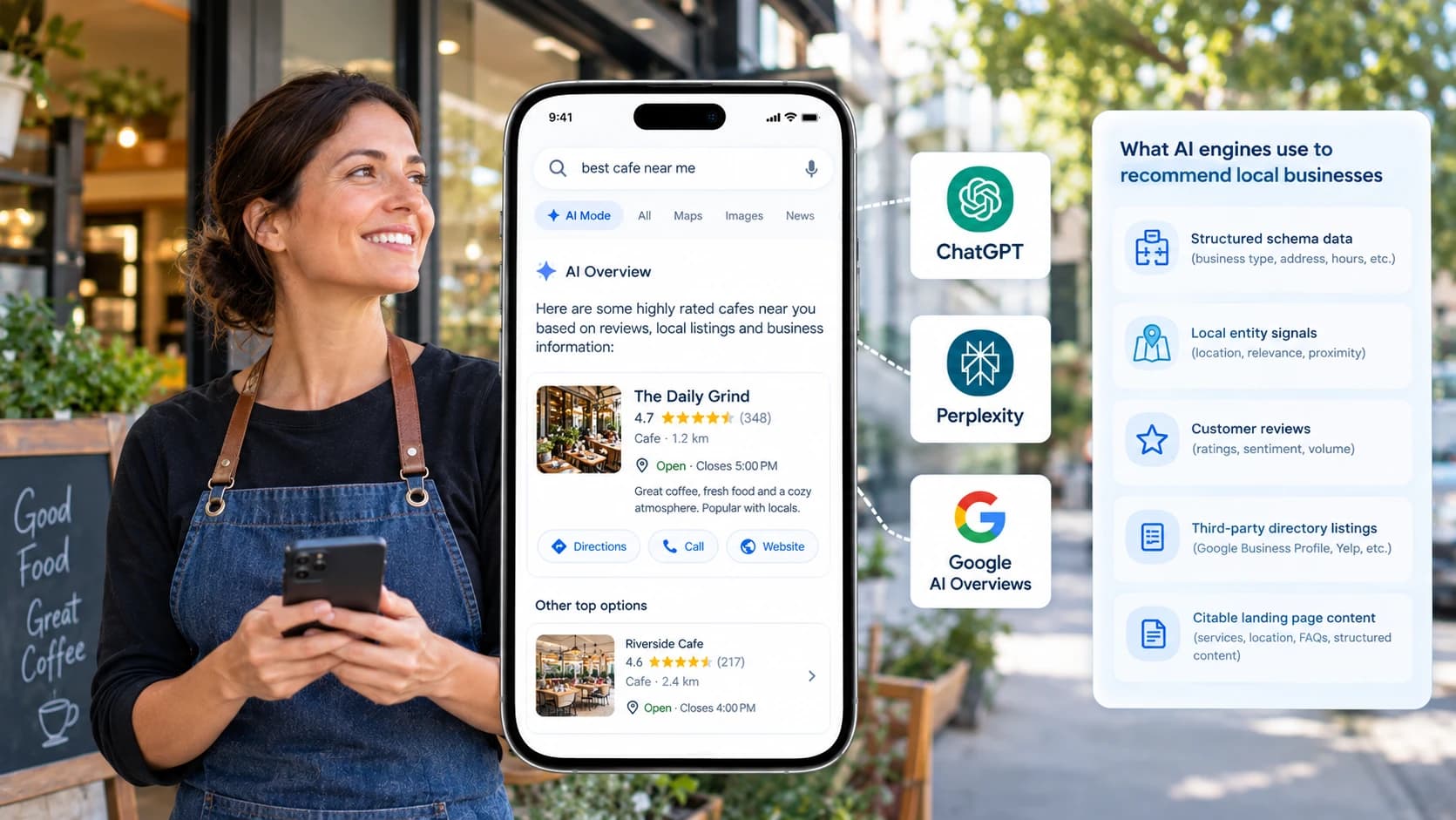
When a Sydney homeowner asks an AI assistant for a plumber or electrician, the assistant tries to recommend a qualified business nearby. These systems do not rely on a single directory. Instead, they are likely to scan multiple online sources to confirm that a trade business is active, licensed, and operating in the relevant suburbs. If your business details are out of date or split across different addresses, AI search tools can struggle to confirm where you work. Keeping your business details clear and accurate helps these tools understand your services and present your business clearly to local customers.
How AI engines gather local business details
AI search tools may gather information by reading public websites, map services, and local business directories. They combine these sources to build an understanding of what services a trade business provides and where it operates.
Rather than relying on a single database, these systems tend to read text across different web pages to verify basic facts. They look for matching names, phone numbers, trade licence details, and suburb names.
When these details align across multiple websites, an AI system is more likely to understand your business setup correctly. Clear information makes it easier for search tools to parse your operating area across Sydney suburbs.
What information AI engines look for
Search systems are likely to look for clear signals that demonstrate a trade business is currently operating in a specific area. These signals include verified NSW licence numbers, accurate opening hours, and active suburb coverage.
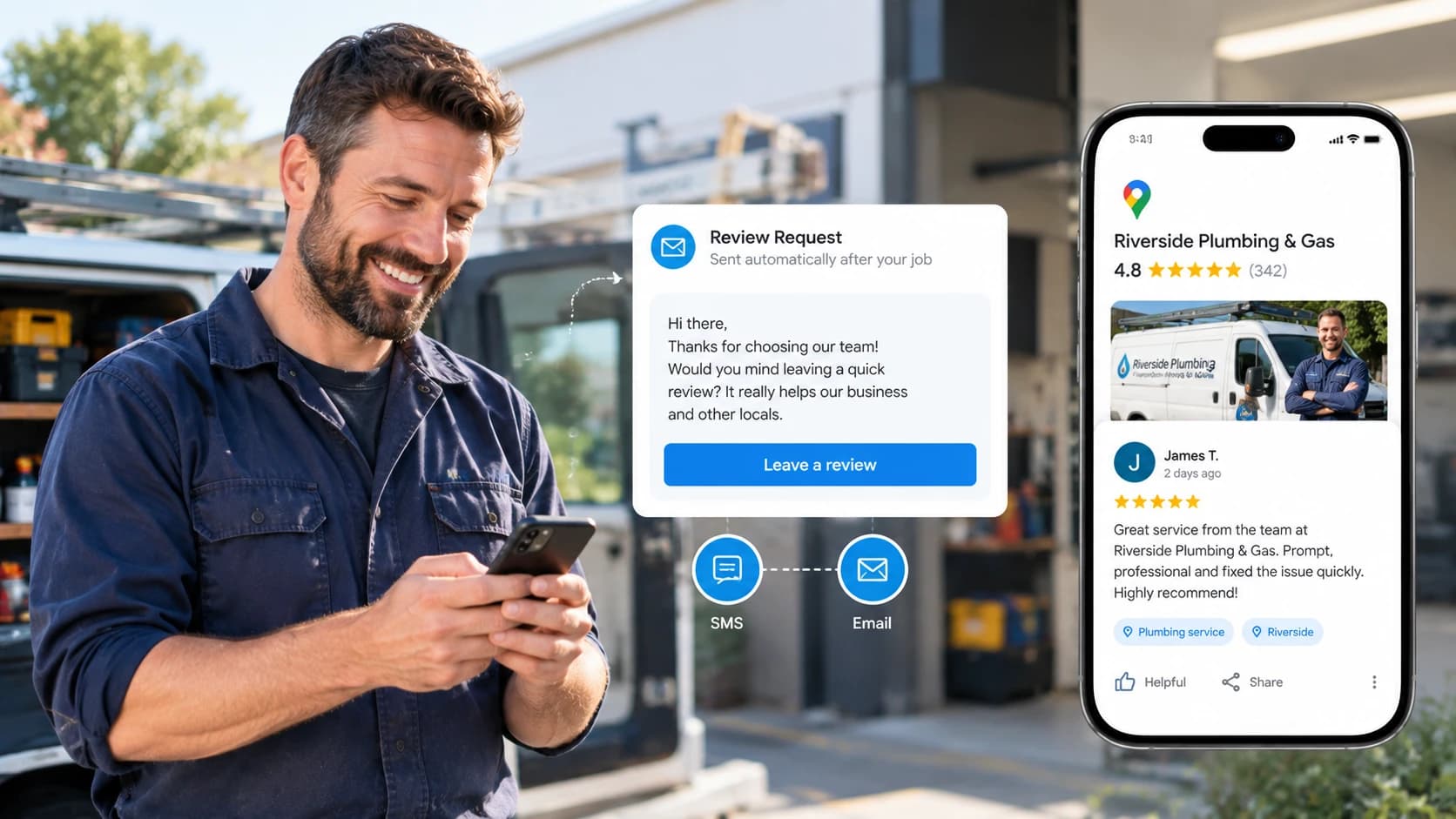
Direct customer feedback also provides context about the work you perform. Recent customer reviews that mention specific job types or suburbs help tools confirm that your business is actively taking on work in those locations.
Having accurate trading hours and contact details ensures that automated systems do not direct customers to your business when you are closed or unreachable. Updating your hours for NSW public holidays helps prevent customers from calling when your doors are shut.
Why inconsistent details make a business harder to recommend
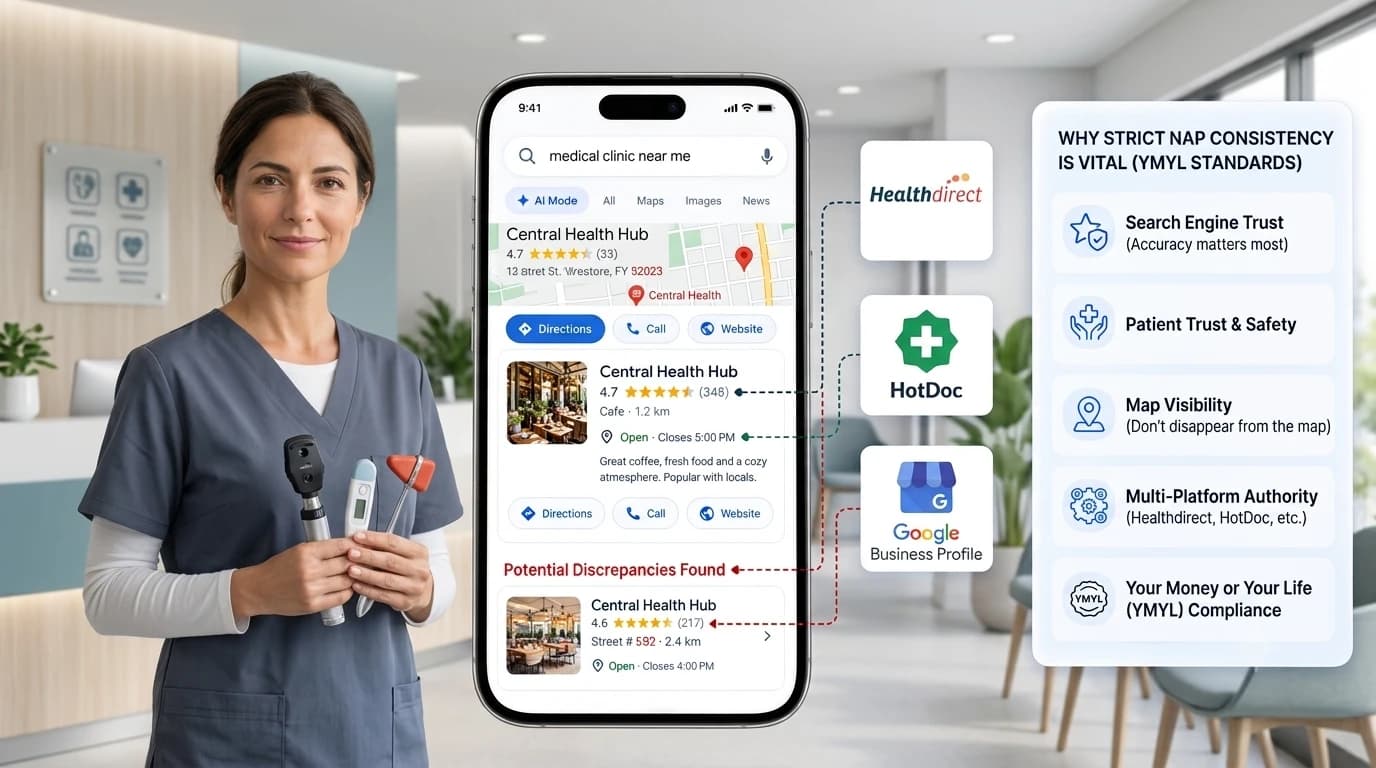
Conflicting details across the web create friction for search systems trying to answer a customer query. If one site lists an old workshop address while another lists a current phone number, the system may hesitate to recommend your business.
A mismatched phone number or incorrect trading hours can lead a system to favour another business with consistent details. When an AI tool cannot verify your operating times with confidence, it is less likely to suggest you for urgent work.
Keeping your business information uniform across directories and review sites removes this confusion. Consistent records allow AI tools to present your trade services accurately to prospective clients.
Managing suburb coverage and public holiday hours in Sydney
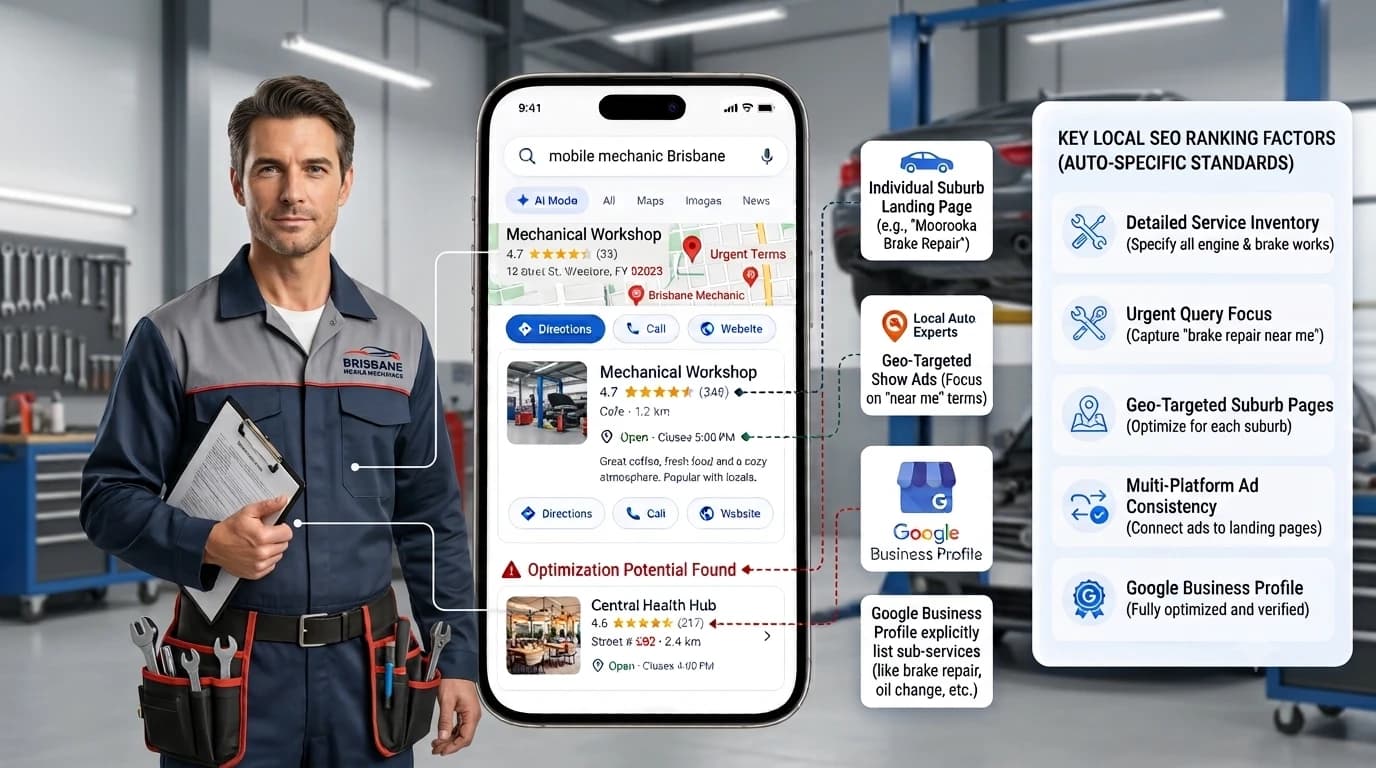
Sydney trade businesses often cover wide geographic zones, from the Northern Beaches to Greater Western Sydney. Expressing your actual service footprint clearly on your website prevents search tools from assuming you cover suburbs where you do not trade.
Displaying your NSW trade licence number on your web pages provides a verifiable reference point for automated systems. This detail helps confirm that your business meets state regulatory standards for your specific trade.
Public holiday schedules in NSW can also affect how search systems view your availability. Setting explicit trading hours for days such as Australia Day, Anzac Day, or the King's Birthday prevents search systems from showing incorrect opening times to local customers.
How structured site details clear up confusion
Structuring your website with clear suburb information helps search tools identify exactly where you work. Dedicated pages for primary service areas make it easy for machines to link your trade to specific Sydney regions.
Using plain language to describe your trade services, licence credentials, and emergency availability helps automated tools parse your site content without misinterpretation.
Placing clear contact information on every page reinforces your location context. You can learn more about managing local search visibility on our Sydney location page or read our guide on appearing on Google Maps.
From SyncMate
How SyncMate helps
LandMark is the local search product from SyncMate that keeps a business findable and correctly described on Google, Apple, Bing and the AI assistants. SyncMate is a managed service sold on a 15-minute call, not self-serve software. It costs $150 a month including GST for the first three months, then $250 a month. There is no lock-in contract, so you can stop at any time and your data comes with you.
Frequently asked questions
Explicitly setting your operating hours for NSW public holidays prevents search tools from showing wrong opening times to local customers. This helps ensure automated systems do not direct people to your business while you are closed.
Related articles
Ensuring your trade business details are clear and uniform across online directories helps AI search systems understand your operating area and trading hours. By maintaining accurate suburb information, current NSW licence details, and consistent phone numbers, you make it easier for local Sydney customers to find and contact you when they need your services.